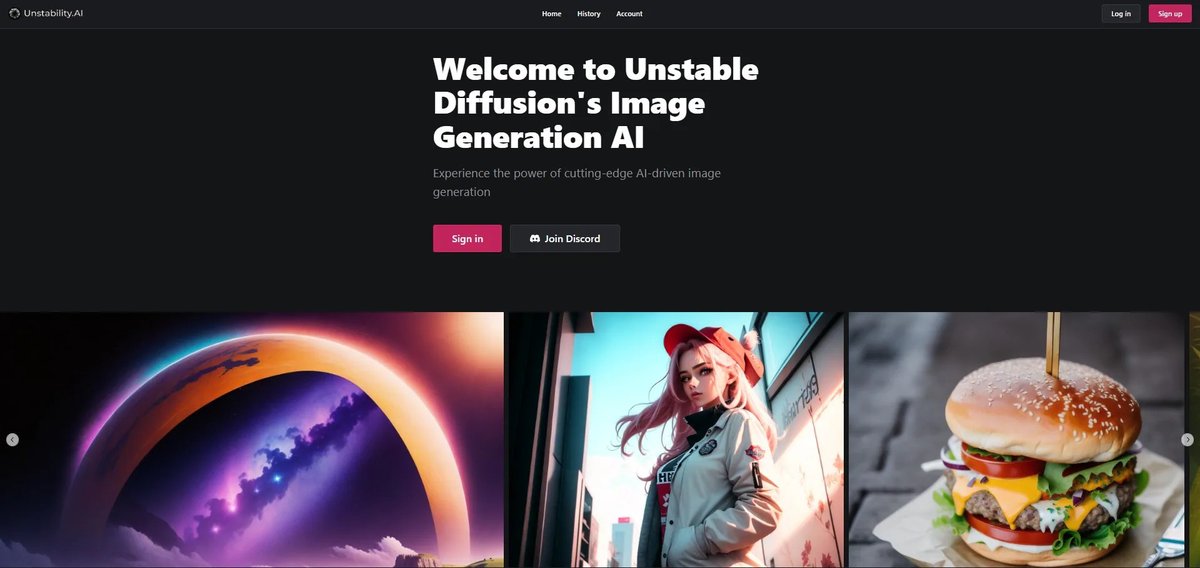
The world of fan art has always been a vibrant, often uninhibited space where passion meets creativity. From intricate sketches celebrating beloved characters to bold, boundary-pushing interpretations deemed "Not Safe For Work" (NSFW), artists have long poured their souls into crafting tributes. But a new era is dawning, profoundly changing how we create and consume these works. We’re talking, of course, about AI. Understanding the nuances of Comparing AI-Generated vs. Traditional NSFW Fan Art isn't just an academic exercise; it's about appreciating the art itself, the ethics involved, and the future of creative expression.
In this rapidly evolving landscape, where digital brushstrokes meet algorithmic precision, distinguishing between the human touch and machine ingenuity becomes crucial. You, the discerning fan and potential creator, need to navigate these waters with clarity and insight.
At a Glance: AI vs. Traditional NSFW Fan Art
Before we dive deep, here's a quick roadmap of what sets these two distinct art forms apart:
- Traditional NSFW Art: Born from human skill, time, and physical materials. Offers unique, often tactile creations imbued with an artist's personal touch and emotional depth.
- AI-Generated NSFW Art: Created at rapid speeds by algorithms trained on vast datasets. Excels at exploring diverse styles and provocative themes, but is digital-only and raises significant ethical questions regarding authorship, consent, and originality.
- The Core Debate: Authenticity and the "soul" of art versus unprecedented speed and exploratory potential.
- Your Preference: Ultimately, what you value in art—the tangible connection, the human story, or the cutting-edge exploration—will shape your appreciation for each.
The Canvas Evolves: A Quick Look at Art's New Frontiers
For millennia, art has been a fundamentally human endeavor. From prehistoric cave paintings to Renaissance masterpieces, from modern photography to intricate digital illustrations, the hand and mind of an artist have been the undeniable origin point. Traditional art, by its very definition, involves direct manipulation of physical or digital mediums—paint, clay, pixels—requiring years of practice, skill, and dedication. It’s a painstaking process, often a solitary journey of vision translated into form.
Then came artificial intelligence. Not as a direct replacement for the artist, but as a powerful, often unsettling, new tool and collaborator. AI's ability to learn, process, and generate new content based on vast troves of existing data has exploded into the creative sphere, fundamentally altering our perceptions of originality and effort. For NSFW fan art, a genre already pushing boundaries and exploring taboo themes, AI's emergence has been nothing short of revolutionary, introducing both exciting possibilities and complex ethical quandaries.
Traditional NSFW Fan Art: The Enduring Power of the Human Touch
Imagine the intricate details of a favorite character, rendered with sensual precision, painstakingly drawn, painted, or sculpted by a dedicated fan artist. This is traditional NSFW fan art in its purest form—a testament to human skill, passion, and often, years of artistic development.
Craftsmanship and Emotional Resonance
Creating traditional art is a deeply personal and skill-intensive process. Whether an artist is sketching with graphite, layering oils, or meticulously modeling a 3D figure, every stroke, every decision, is a reflection of their training, their intent, and their emotional investment. This isn't merely about replicating an image; it's about interpreting a vision, infusing it with personal style, and wrestling with the medium until it conveys the desired emotion or narrative.
The time commitment alone often speaks volumes. A single, highly detailed traditional piece of NSFW fan art can take dozens, even hundreds of hours. This labor of love, this intimate struggle between artist and material, imbues the final work with a palpable sense of effort and human presence. You can often feel the artist's hand in the texture of the brushstrokes, the deliberate choice of color, or the nuanced expression of a character.
Uniqueness and Authenticity: A Singular Creation
One of the greatest strengths of traditional art lies in its inherent uniqueness. Each piece is, by its very nature, original and often irreplicable. Even if an artist attempts to recreate a previous work, subtle variations in technique, mood, or material will ensure that no two pieces are ever truly identical. This singularity contributes significantly to its perceived authenticity and value.
When you view a traditional NSFW fan art piece, you're experiencing something that arose directly from a human mind and hand, a unique expression forged through a specific moment in time. This direct human connection often fosters a deeper sense of appreciation and intimacy between the viewer and the artwork. It carries the "soul" of the artist, making it special in a way a machine-generated image often struggles to emulate.
The Tactile Connection: Art You Can Almost Touch
For physical traditional art—like paintings, sculptures, or even high-quality prints—there's a tactile quality that digital art simply cannot replicate. The texture of the canvas, the sheen of the paint, the weight of a sculpture—these physical attributes add another layer to the viewing experience. There's an intimacy in standing before a physical object, allowing its presence to impact you directly, beyond just the visual information. Even digital traditional art, created with human intention and skill, strives for this depth, though it remains confined to a screen.
Limitations of the Hand-Drawn: Time, Cost, and Skill Ceilings
Despite its many advantages, traditional art comes with inherent limitations. The sheer time and resource investment are significant. High-quality materials can be expensive, and the years required to develop the necessary artistic skill are substantial. An artist's personal skill level and experience can also limit the scope of their ideas, making certain complex or highly experimental concepts difficult, if not impossible, to execute within practical constraints. This means that while traditional art is deeply rewarding, its reach and output are naturally bounded by human capacity.
AI-Generated NSFW Fan Art: Algorithmic Provocation and the Digital Frontier
Enter AI, a force that has not just augmented, but fundamentally transformed, the creative landscape, particularly in areas like NSFW fan art. Trained on colossal datasets of existing imagery—including vast amounts of "Not Safe For Work" content—AI algorithms can now generate astonishingly detailed and diverse digital artworks.
Speed and Scale: Creativity on Demand
The most striking advantage of AI in art generation is its unparalleled speed and efficiency. Unlike a human artist who might spend days or weeks on a single piece, an AI algorithm can produce countless unique images or animations within minutes, often seconds, based on simple text prompts or parameters. This speed allows for rapid iteration and exploration of a multitude of ideas, styles, and compositions that would be impractical for a human artist.
AI art can be broadly categorized into two types: generative AI, which creates entirely new and unique images or animations from scratch based on its training, and assistive AI, which acts as a tool to help human artists with tasks like upscaling, style transfer, or content filling. Both have massive implications for fan art creation, enabling an output volume previously unimaginable.
Pushing Boundaries: Exploring the Unthinkable
AI isn't bound by human inhibitions, social norms, or even the practical limitations of physics. By processing and recombining elements from its training data in novel ways, AI can generate artwork that pushes the very boundaries of creativity and conventional thought. It can render highly realistic scenarios, create abstract and surreal interpretations, or blend disparate concepts into provocative new forms. This freedom from human constraints allows for the exploration of themes and concepts that might be considered taboo or controversial, or simply too complex for a human artist to visualize easily. From depicting highly specific character interactions to exploring entirely new fantastical anatomies, AI opens up a vast, often unbridored, realm of artistic expression. For instance, the discussion around projects like Strike the Blood AI NSFW highlights how AI can extend existing fictional universes into new, often explicit, visual territories.
The Ethical Minefield: Authorship, Consent, and Exploitation
The integration of AI into NSFW art has ignited intense debate within the art community and beyond. The ethical implications are profound and complex, touching upon core questions of:
- Authorship: Who is the "artist" when an algorithm generates an image? Is it the person who wrote the prompt, the developer of the AI, or the AI itself? This blurring of lines challenges traditional notions of intellectual property and creative ownership.
- Consent: A major concern, particularly in NSFW content, is the source of the training data. If AI models are trained on existing human art without explicit consent from the original artists, or worse, if they are used to generate "deepfake" images of real individuals without their permission, it raises serious ethical and legal flags. The potential for misuse, including non-consensual imagery, is a chilling aspect of AI's power.
- Exploitation: The very act of training AI on existing art without compensation to the original creators can be seen as a form of exploitation, devaluing human labor and potentially undermining the livelihoods of artists.
These debates are not merely academic; they are shaping the future of digital ethics and artistic rights.
The Digital Divide: Lack of Tactile Quality
One key limitation of AI-generated art, particularly in its current state, is its purely digital nature. Unlike a painting you can touch or a sculpture you can walk around, AI art exists solely on screens. This means it inherently lacks the tactile quality and physical presence that can create a deep, intimate connection between a viewer and a traditional artwork. While it can be visually stunning, the absence of this physical dimension means it often falls short in providing the same kind of immersive, multi-sensory experience.
Head-to-Head: Comparing AI and Traditional NSFW Fan Art
To truly understand the divergence and convergence of these two art forms, let's lay out their characteristics side-by-side.
| Feature | Traditional NSFW Fan Art | AI-Generated NSFW Fan Art |
|---|---|---|
| Creation Process | Manual, highly skilled, often painstaking, time-intensive. Direct human input. | Algorithmic, prompt-driven, rapid iteration, efficient. Machine-learning-based. |
| Authenticity | High; each piece is unique, original, and bears the direct mark of human creativity and emotion. | Debatable; generated by a machine, potentially replicable, often lacks a singular "authorial intent." |
| Emotional Depth | Direct expression of the artist's feelings, experiences, and interpretation. Can convey complex human emotions. | Interpreted/simulated by AI based on training data. Can mimic emotion convincingly but lacks genuine "feeling." |
| Tactile Quality | Present for physical media (texture, weight, etc.). Even digital art has a human-crafted feel. | Absent; purely digital, exists on a screen. Lacks physical presence and texture. |
| Exploration Range | Limited by artist's skill, time, and conventional materials/techniques. Innovations are human-driven. | Vast; can explore unconventional styles, themes, and concepts at an unprecedented speed, free from human limitations. |
| Ethical Concerns | Primarily focused on copyright of characters/IP, sometimes artist compensation for commissions. | High; major concerns around training data consent, intellectual property ownership, potential for non-consensual image generation (deepfakes), and job displacement. |
| Cost/Time | Can be high (materials, tools), significant time investment, often reflected in price. | Low cost for generating images (after initial software/hardware investment), extremely fast output. |
The Authenticity Paradox: What Defines "Art"?
Perhaps the most philosophical debate surrounding AI art is its authenticity. If a machine creates an image, is it truly art? And who, then, is the artist? Proponents argue that the human input of the prompt, the selection of parameters, and the curation of outputs constitutes a new form of artistic direction. Critics counter that the absence of genuine human struggle, personal narrative, and the tactile engagement with materials diminishes its artistic merit.
This paradox forces us to reconsider our very definition of art. Is it solely about the product, or equally about the process and the intent behind it? Traditional art undeniably benefits from the latter, offering a rich backstory of human effort and vision. AI art, conversely, forces us to re-evaluate whether the origin story matters as much as the final aesthetic or emotional impact.
The Viewer's Lens: What Do You Value?
Ultimately, the "better" form of NSFW fan art is subjective and depends entirely on your preferences and priorities as a viewer or collector.
- If you value: The human touch, unique craftsmanship, emotional depth, and a tangible connection to the creator's journey, traditional NSFW fan art will likely resonate more deeply. You appreciate the story behind the art as much as the art itself.
- If you are drawn to: Cutting-edge visuals, rapid exploration of diverse themes, provocative concepts, and the sheer volume of new content, AI-generated NSFW fan art offers an exciting, albeit ethically complex, frontier. You prioritize novelty and visual output.
Both forms serve different purposes and appeal to different sensibilities. The key is to understand what each offers and decide what speaks most powerfully to you.
The Evolving Landscape: Where Do We Go From Here?
The rise of AI isn't going to make traditional art disappear; rather, it's forcing a re-evaluation and adaptation within the creative world. The future will likely be a complex interplay of both.
Hybrid Approaches: AI as a Collaborator, Not a Replacement
Many forward-thinking artists are already embracing AI not as a competitor, but as a powerful new tool in their arsenal. Assistive AI can help artists quickly generate concept art, explore different styles, or even refine details, freeing up human creativity for higher-level artistic decisions. Imagine an artist using AI to quickly generate variations of a character pose or costume, then taking that AI-generated foundation and refining it with their unique human touch, adding the nuanced expressions and details only a human can truly master. This hybrid approach combines the efficiency of AI with the irreplaceable skill and soul of the human artist.
Regulation and Community Standards: A Growing Necessity
As AI art becomes more sophisticated and prevalent, especially in the NSFW space, the need for clear ethical guidelines and legal frameworks becomes increasingly urgent. Discussions around regulating AI-generated content, particularly regarding consent, copyright, and the prevention of misuse (like deepfakes), are ongoing and critical. Art communities, platforms, and legal bodies will need to collaborate to establish standards that protect artists, subjects, and consumers alike, ensuring that this powerful technology is used responsibly and ethically.
Redefining Art and Creativity
AI challenges us to rethink what art is and what it means to be creative. Does creativity require human consciousness and intent, or can it manifest through complex algorithms? This existential question is at the heart of the current artistic revolution. AI's ability to create stunning visuals forces us to expand our definitions, recognizing that the journey of artistic expression is far from over—it's merely entering a new, technologically advanced chapter. The challenge is not to resist this evolution, but to engage with it thoughtfully, shaping its direction with human values at the forefront.
Common Questions & Misconceptions About NSFW Art (AI vs. Traditional)
The rapid pace of AI development has understandably led to many questions and some pervasive misunderstandings. Let's clear up a few.
"Is AI art stealing from human artists?"
This is a hotly debated topic. AI models are trained on massive datasets, which inevitably include countless artworks created by human artists, often without their explicit permission or compensation. From one perspective, this is "digital theft" of artistic styles and concepts. From another, it's argued to be no different than a human artist learning from and being inspired by previous works. The legal and ethical frameworks around this are still being developed, but it's clear that artists deserve a say in how their work is used to train these powerful systems.
"Can AI truly express emotion?"
AI can simulate emotion with incredible realism, replicating facial expressions, body language, and atmospheric cues associated with human feelings. However, it doesn't feel emotion in the way a human does. It processes patterns and generates outputs that look like emotion based on its training data. The emotional depth you perceive in AI art is often a projection from your own human interpretation, not a direct expression of the machine's internal state.
"Is AI-generated NSFW art always explicit?"
No, not necessarily. While AI can certainly generate highly explicit content if prompted to do so (and trained on such data), its output range is vast. It can create suggestive, romantic, tastefully erotic, or purely artistic interpretations of NSFW themes without being overtly graphic. The level of explicitness depends entirely on the prompts given to the AI and the filters (if any) implemented by the platform or user.
"What about consent in AI NSFW?"
This is arguably the most critical ethical concern. The ability of AI to generate highly realistic images of individuals, whether real or fictional, raises immense questions about consent. The generation of non-consensual imagery, often referred to as "deepfakes," is a serious problem with legal and personal ramifications. Responsible AI development and usage must prioritize strong ethical safeguards to prevent the creation and dissemination of such harmful content, especially for real individuals.
Embracing the Future of NSFW Fan Art with Open Eyes
The journey into Comparing AI-Generated vs. Traditional NSFW Fan Art reveals a landscape rich with innovation, passion, and profound ethical considerations. You now have a deeper understanding of the distinct qualities, strengths, and limitations of each. Traditional art continues to captivate with its irreplaceable human touch, its authenticity, and the tangible story of its creation. AI art, on the other hand, beckons with its boundless potential for rapid exploration, stylistic innovation, and its capacity to push the boundaries of visual possibility.
As technology continues to evolve, the lines between these two forms will likely blur further, leading to new hybrid creations and entirely unforeseen artistic expressions. Your role as a viewer, a fan, or even a creator, is to approach this evolving world with an informed perspective. Appreciate the craftsmanship, question the ethics, celebrate the creativity, and continue to engage with art in all its compelling, sometimes controversial, forms. The future of fan art isn't about choosing one over the other; it's about understanding and engaging with both, shaping a creative ecosystem that is both innovative and responsible.